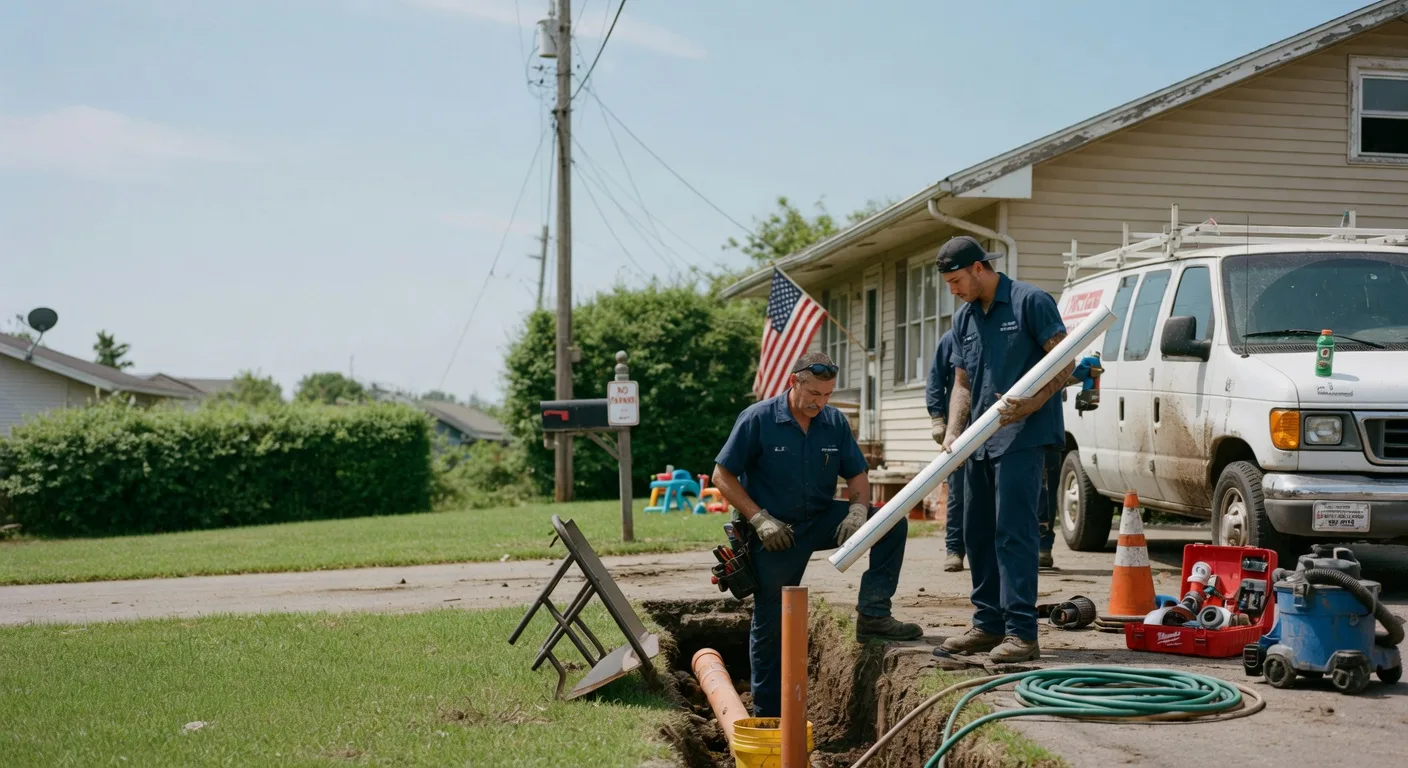
Should the job use a cable machine or hydro jetting?
It depends on what is in the pipe and how far it reaches. A cable machine, sometimes called a snake, is usually enough for a localized clog from hair, paper, or a small root intrusion. The rotating cable punches a channel through the blockage and restores flow, and for a single slow bathroom sink or tub that is all the job needs. The limit of a cable is what it leaves behind. It opens a hole through the middle of a clog, but grease, scale, and sludge stay stuck to the pipe wall, so the line narrows again within weeks. Hydro jetting sends high-pressure water through the line and scours the full interior wall. It is the better call for grease coating a kitchen line, recurring clogs in the same spot, roots that were cut back once and returned, or a line that keeps slowing down after cabling. A jetter needs a reachable cleanout, and it is not right for a pipe that is cracked or collapsing. That is where a camera comes in. A camera inspection shows the pipe's condition before the plumber chooses a method. The plumber decides after seeing the line, and that choice affects the cost of the visit for a home in Ringwood, IL.
One practical point is that the choice is not always made in advance. A plumber often starts with a cable, finds out what is actually in the line, and then moves to a jetter if the cable returns with grease or sludge instead of a clean break. For that reason it helps to ask which method is planned and what would make the plumber change course. Jetting also depends on pipe condition, which is another reason a camera sometimes comes first on an older line. Clay and cast iron that are thin, cracked, or shifted can be damaged by high pressure, while newer plastic pipe handles it well. Water use matters too: a jetter sends a lot of water into the line, so the drain has to be open and flowing downstream. After either method, run water for several minutes and watch for slow spots or gurgling that might mean something is still in the way.
Are flushable wipes really a problem for drain lines?
You flush a wipe that says flushable, and a week later the toilet is slow or the whole line gurgles. Yes, they are a problem.
Toilet paper falls apart in water within minutes. Wipes are woven fibre and hold together. They travel down, then catch on a rough spot: a clay joint, a root hair, a bend, or a coat of grease on the pipe wall. The next wipe snags on that one. Over weeks they twist into a rope that traps paper and everything else behind it.
Signs to watch for: a slow toilet, gurgling from a tub or sink when you flush, or a clog that keeps returning a few weeks after it is cleared.
Safe homeowner check: stop flushing wipes and try a plunger on the one toilet. Do not keep flushing to see if it clears. If water is rising toward the rim, stop and wait.
Stop running water and call now if more than one drain is backing up, or if sewage shows in a floor drain or tub. That points to the main line, not the toilet.
A cable machine often pulls a wipe mass out of a single branch. A packed main line, or one with grease or roots in it, may need hydro jetting, and a camera shows which. Cost depends on access, how far down the line the blockage sits, and how much has to be opened. Expert Plumbers Co is a referral service. Call (380) 262-9173 for Emergency Drain Cleaning referrals in Ringwood, IL.
To stop it coming back, give the plumber the full history of what has gone down the toilet, including the brand of wipe and how often. Many packages say flushable, but that is a label, not a test the pipe has to pass. Keep a small covered bin next to the toilet so the habit is easy to change, and tell everyone in the house, including guests and children. If a wipe mass has been pulled out of the line, ask to see it, because its size gives a rough idea of how much is still lodged further along. In older homes with clay or cast iron, rough joints and scale make the pipe catch wipes far sooner than smooth plastic pipe does, so a line that took them for years can suddenly start clogging. After the line is cleared, a slow toilet that stays slow suggests another cause.
Small flies keep coming out of the drain. Is that a clog?
Possibly, but not always. Small flies rising out of a drain are drain flies. They breed in the organic film that coats the inside of the trap and the first few inches of pipe, not in clean standing water. The film is the nursery.
A slow or partly blocked drain gives that film somewhere to sit, which is why flies and a slow drain often show up together. A drain nobody uses is a different case. When its trap dries out, flies and sewer odor both come straight up the pipe.
Safe homeowner check. Tape a card or a clear bag over each suspect drain overnight. Flies on the underside show which one they come from. Clean the strainer and the visible part of the drain. On a rarely used drain, pour in a bucket of water to refill the trap.
A cable machine is enough when one fixture is slow and no flies are involved. A cable only cuts a channel through the blockage and leaves the film on the pipe wall. A line that keeps producing flies after cleaning usually needs hydro jetting, which strips the wall back to bare pipe.
One fixture is a local job. Flies plus several slow drains point further down the line: grease build-up on the pipe wall, a bellied section holding water, or root intrusion at a joint. That calls for a camera inspection before anyone picks equipment.
Stop running water and call if drains gurgle, sewage odor fills the room, or water rises in the lowest fixture.
Expert Plumbers Co is a referral service. We refer homeowners in Ringwood, IL to an independent local plumber for Drain Cleaning. Call (380) 262-9173.
The choice of cleaner matters. Bleach poured down the drain kills flies on contact but leaves the film they feed on, so they return within days. Boiling water helps on metal pipe but can soften or loosen joints on some plastic, so use hot tap water. A stiff brush on the strainer area and the first few inches of pipe does more than any liquid. An enzyme cleaner left overnight can digest the film, but treat it as upkeep, not a cure for a blocked line.
Check the overflow opening on sinks and tubs too. That channel is rarely cleaned and can breed flies.
Adult drain flies are weak fliers and rest on walls near the source, so counting them each evening shows whether cleaning is working. If the numbers do not fall within a week of thorough cleaning, the source is deeper in the line, or in a seldom-used floor drain in a basement or utility room that nobody thinks about.
We had roots cut out of our sewer line a year ago and now it is backing up again. What actually stops them coming back?
Cutting does not stop roots. It clears the pipe so water can pass, but the roots are still alive outside it and they grow back through the same opening. A year is a fairly typical time for a line to fill up again, and sometimes it is faster.
Roots get in where the pipe is not sealed: a joint that has shifted, a hairline crack, a broken section. Tree roots follow moisture, and a sewer pipe leaks a little water and vapor, which draws them in. As long as the entry point is open, regrowth is only a matter of time.
What actually removes the cause is closing that opening. There are three common routes, and the right one depends on what a camera inspection shows.
A spot repair fixes a single bad joint or short cracked section. It makes sense when the rest of the pipe is sound.
A liner is a resin-saturated sleeve that is cured inside the old pipe, sealing joints and cracks along its length. It suits pipes that are cracked or leaking at several joints but are still round and in place.
Replacement is the answer when the pipe is collapsed, badly offset, bellied or made of a material that has failed, such as clay in poor shape.
Chemical products poured into the line, or foaming treatments, may slow some regrowth but do not seal the entry point, so they are not a repair.
Safe checks you can do:
Note when the slow drains started and which fixtures are affected. Mention the earlier root cutting to the plumber, and the approximate date.
Stop running water and call now if sewage is backing up into the house.
If a full repair is not possible right away, scheduled cleaning before the next backup can manage the problem, though it stays a stopgap. Cost depends on how many entry points there are, depth and length, access around trees and hardscape, the method chosen and permits under local code. To be connected with an independent local plumber in Ringwood, IL, call Expert Plumbers Co on (380) 262-9173.
Will baking soda and vinegar, or a kettle of boiling water, clear a slow drain?
You have a slow drain, so you tried baking soda and vinegar, or a kettle of boiling water. It still crawls, or the clog is back by morning. That is the usual result.
The fizz is mild. It can freshen a drain, but it does nothing to a solid clog of hair, soap scum, grease or paper. Boiling water melts grease for a moment, then the grease cools and sets again further down the pipe, where it is harder to reach. Boiling water can also soften PVC joints and crack porcelain. Hot tap water is safer than a kettle.
The real causes sit deeper: grease build-up on the pipe wall, scale in old cast iron, roots entering a clay joint on the main, or a bellied line that holds water and solids at its low point. A blocked vent stack can also make a drain sluggish and gurgling, which looks like a clog but is an air problem.
Count the affected drains. One slow fixture usually means a hair, soap or grease clog in that fixture or its branch. If the tub, sinks and toilets all run slow together, or you hear gurgling after a flush, the trouble is in the main line or vent, and no kitchen remedy will reach it.
Safe homeowner check: Remove the stopper or strainer and clear hair and residue by hand. Try a plunger with a good seal. Run hot tap water, not boiling. Check whether other fixtures are slow. Avoid stacking store-bought chemical cleaners, which can sit in a standing pipe.
Stop running water and call now if more than one fixture is backing up, if dark water is rising in a tub or floor drain, if you smell sewage, or if water comes up when you flush or drain the washer.
A cable machine is usually enough for a clog in a single branch. Hydro jetting is the better tool when grease or scale coats the pipe wall. A camera inspection is the right step when the drain clears and slows again within days, since that pattern points to a belly, roots or a damaged section.
Expert Plumbers Co is a referral service. We connect you with an independent local plumber in Ringwood, IL. Call (380) 262-9173.
Tell the plumber what you already tried. Ask what they found in the line, not only that it was cleared. The scope depends on access to the pipe, whether a fixture has to be removed, the pipe material, and whether the cause is a simple clog or damage that needs repair.